The blockchain: where is Europe?
China and the United States are leaders when it comes to blockchain technology. For example, the Chinese megacity of Chongqing - with some 31 million inhabitants - recently launched its own innovation competition around Blockchain of Things, a combination of blockchain technology and Internet of Things. And Europe? It's following closely, surely? Not exactly. Europe, in fact, is hardly engaged in this technology at all. A bad thing, because if this continues, we as Europe will soon no longer be able to determine our own digital future. It is high time for a European alternative to the Chinese Blockchain of Things.
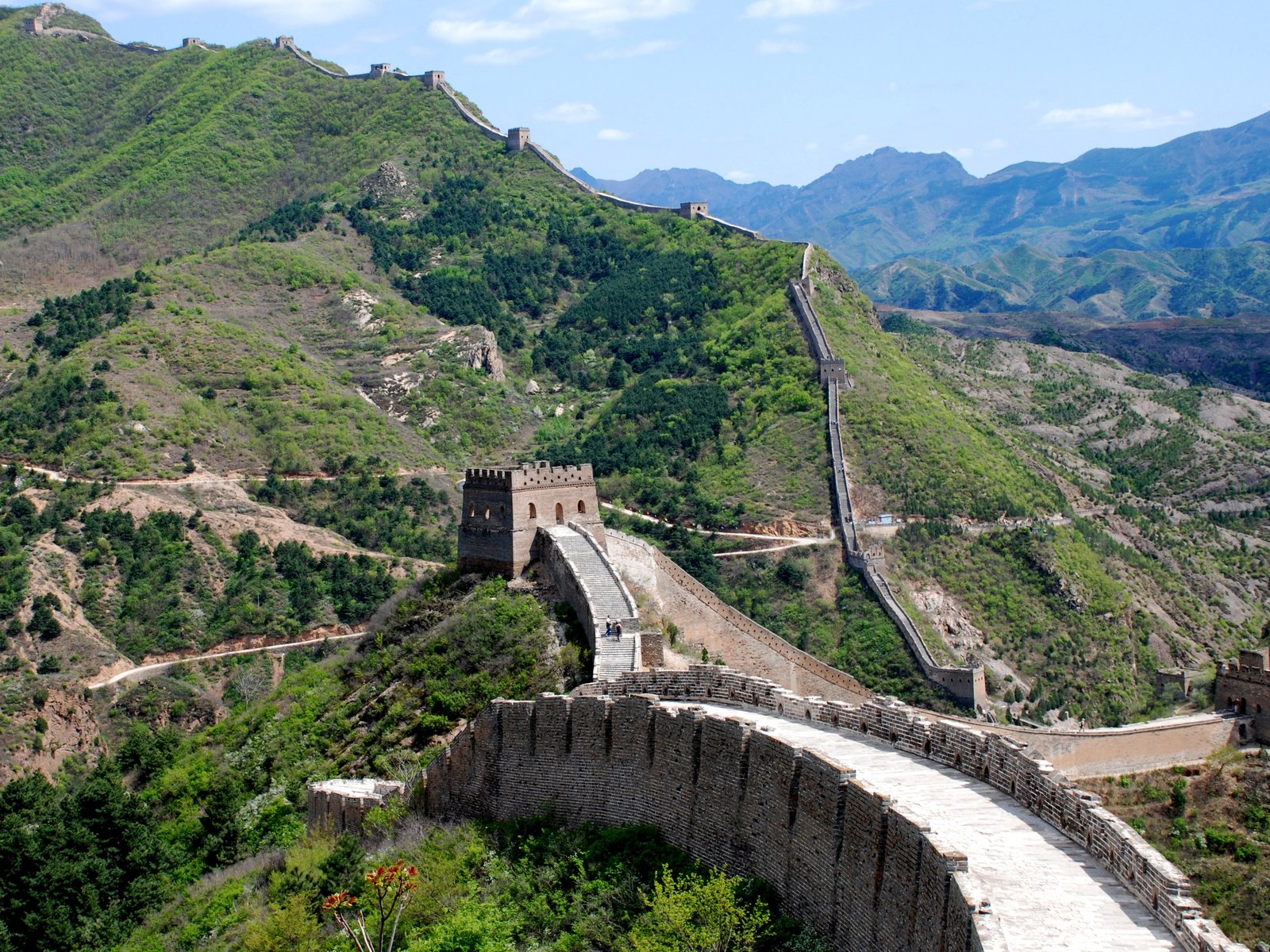
China is the world leader in terms of patents obtained and granted to government and private companies for components of a Blockchain of Things. The country is closely followed by the United States, and is a giant in blockchain technology compared to the European Union. Why is China so successful?
Chinese blockchain information network
China's success has to do with the combination of a long-term (for decades) view of technology in general, combined with strong central control. This combination has made the People's Republic successful in implementing technological infrastructures worldwide, such as the Belt and Road initiative of Artificial Intelligence. This is an initiative by China to connect China to Africa and Europe by land and sea to stimulate trade. Meanwhile, some forty cities are connected to this ICT infrastructure controlled by China. China's goal is to quickly grow to a hundred Chinese cities, with foreign cities and regions included in the long run. The rapid Chinese developments should give us, the Dutch and Europeans, serious food for thought. Do we want to eventually become part of a Chinese blockchain information network, controlled in Beijing?
Investment
If we in Europe want to remain independent and determine our own digital future, we must develop an alternative to the Chinese blockchain of things. A prerequisite for this European infrastructure is that it allows for communication with its Chinese and American equivalents. However, the development of such a European initiative cannot be done without central coordination and a long-term vision on Blockchain.
It is therefore essential that we as Europe invest in knowledge to be able to apply algorithms and software for successful blockchain applications. A reliable and secure way for people and machines to do transactions that are (automatically) approved by all relevant parties.
Want to know more?
This post is an extract from the blog Blockchain of Things: global infrastructure made in China by Ben van Lier. Click here to learn more about this topic.
Related articles
-
What is blockchain?
Blockchain is still sometimes referred to in the media as "the greatest innovation since the Internet. But what exactly is blockchain?
-

Blockchain and the registration unborn child
Blockchain can be used to help municipalities share data relating to the registration of the unborn child, thus preventing incorrect registration. That is the outcome of a Proof of Concept (PoC) carried out by Centric. Ben van Lier (director of strategy & information at Centric) and Jan van den Bosch (business development manager at Centric) talk about the usefulness of these types of projects in general, the blockchain and, of course, the lessons learned.
-

Blockchain for transparency government
In 2020, the accountancy and consultancy organization BDO published a research report (performed by Publicum) with data on the state of affairs worldwide regarding the blockchain in the public sector. This report provides a good insight into how this topic is at the top of the agenda, but is not yet really taking off. Half of the organizations surveyed have taken steps, but only 6% actually invest money in projects. It is therefore remarkable that, in response to this publication, BDO Netherlands reports that, according to the VNG (Association of Dutch Municipalities), 100 municipalities are conducting pilots with blockchain.